

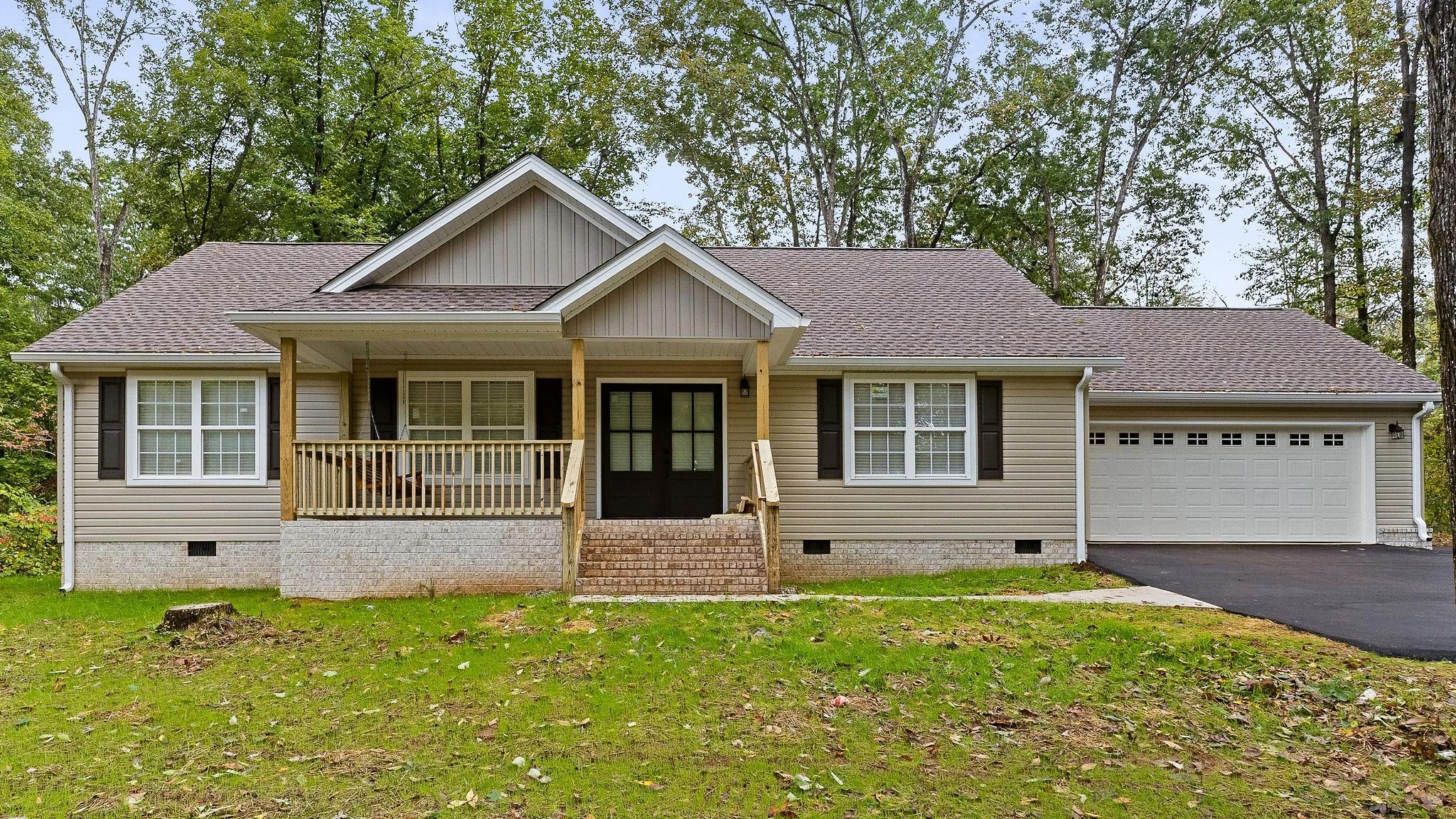
Building outside city limits near Livingston is exciting, but the utility question can make or break a land purchase. We have walked lots with buyers who fell in love with a view, only to learn later that sewer is not available and the soil will not support a conventional septic system. That is why we talk about septic vs sewer in Livingston, TN early, before you finalize plans or close on property.
In the Upper Cumberland, the “right” answer depends on location, topography, soil conditions, and what the local utility district can actually provide at the road. In this guide, we will explain how to verify sewer availability, what a perk test in Tennessee really tells you, the typical approval steps for each option, and how utilities affect driveway placement, grading, and where your home can sit.
We build and plan projects from our home base in Cookeville, and we regularly help clients in Livingston evaluate rural utilities planning as part of the site evaluation process. If you are trying to decide whether a septic system for new construction or a sewer connection makes more sense, this will help you ask the right questions at the right time.
Start with availability: Is sewer actually an option?
Sewer can sound like the simplest choice, but near Livingston it is not always available, especially outside city limits and in more rural pockets of Overton County. Before you assume you can connect, we recommend confirming three things in writing:
- Is there a sewer main at the road? A nearby line across the highway or down the street does not automatically mean you can tap in.
- Is there capacity and permission to connect? Some systems restrict new taps based on capacity, basin limitations, or planned upgrades.
- Can you physically get from the house to the tap by gravity, or will you need a pump? A low building site can require a grinder pump or lift station, which changes cost and maintenance.
How we verify sewer service near Livingston
When we do a site evaluation with clients, we treat sewer verification like any other critical due diligence item.
- Call the utility provider that serves that specific road. Listings can vary by address, and real estate listings are not always accurate about “sewer available.”
- Ask for connection requirements in writing. That includes any easements, right-of-way work, cleanout requirements, and whether a pump system is required.
- Confirm the location of the main and the point of connection. If the main is on the opposite side of the road, boring under pavement and traffic control can add time and cost.
Sewer tap fees and the “hidden” costs
People often compare sewer vs septic based on the idea that sewer is “just a bill each month.” In reality, sewer can include up-front costs such as:
- Sewer tap fees (connection fees) charged by the utility.
- Impact fees in some jurisdictions or for certain expansions.
- Trenching, boring, or road crossings to reach the main.
- A grinder pump system if gravity flow is not possible.
Those costs vary by provider and site conditions, so we do not guess. We help you gather real numbers early so your budget is based on facts, not assumptions.
If sewer is not available, septic becomes a site planning decision
In much of the rural area around Livingston, septic is the default. That does not mean it is simple. A septic system for new construction is tied directly to soil, slope, drainage patterns, and the space you have for a drainfield. We have seen beautiful tracts that could build a home easily, but the usable drainfield area was limited by rock, steep grades, or setbacks.
What a perk test in Tennessee is actually evaluating
- Soil profile and seasonal water concerns. Inspectors look for evidence of high water tables, restrictive layers, or other features that affect treatment and absorption.
- Absorption rate and suitability for a drainfield. The goal is to confirm the soil can accept and treat effluent at a safe rate.
In the Upper Cumberland, soil conditions can change quickly across a single property. You might have suitable soil on one ridge and shallow soils with rock outcrops fifty yards away. That is why we prefer to evaluate septic feasibility before the house footprint is locked in.
Typical approval steps for a septic system near Livingston
Exact requirements can vary by jurisdiction and site, but the process often looks like this:
- Preliminary site visit and soil evaluation. This is where you learn whether a conventional system is likely or whether you should plan for an alternative design.
- System design and layout. The drainfield location, reserve area, and setbacks are mapped.
- Permitting through the appropriate authority. The permit will specify system type, size, and installation requirements.
- Installation by a qualified installer. Proper trench depth, aggregate, piping, and protection from compaction matter.
- Inspection and final approval. This protects you and ensures the system is built to the approved plan.
We coordinate this timeline as part of our broader Home Design & Planning process because septic and site planning are inseparable.
Soil, slope, and layout: How utilities shape your buildable area
Utilities are not just a line item in your budget. They can determine where your home can sit, where your driveway can go, and how much grading you need. This is one of the biggest reasons we encourage buyers to do rural utilities planning before purchasing land.
Septic setbacks and reserve areas
- Primary drainfield area sized for the home and soil conditions.
- Reserve area for a future replacement field.
- Setbacks from wells, streams, property lines, and the home.
Those constraints can push your build site uphill, away from a creek, or into a narrower band of usable space. If you pick a house plan first and then try to “fit septic somewhere,” you can end up redesigning the home, moving the driveway, or adding retaining walls.
Topography considerations in the Livingston area
Around Livingston, we often see rolling terrain and properties with mixed slopes. Slope affects both septic and sewer:
- For septic: Steeper slopes can limit drainfield options or require more engineered solutions.
- For sewer: If the main is higher than your build site, you may need a pump system.
In either case, we look at the whole site as a system: drainage, access, foundation approach, and utility routing. That is part of the site evaluation we do under our broader Residential Construction Services.
Real-world scenario we see often
- If sewer is available at the road, the long run to the back can mean deeper trenches, more cleanouts, and possibly a pump, depending on elevation.
- If septic is required, the back of the property might have shallow soils and rock, while the front has better soils.
The result is that the best house site is not always where you first imagine it. A quick feasibility review before you buy can save months of frustration.
Comparing septic vs sewer: Cost, lifestyle, and long-term maintenance
When clients ask us to compare septic vs sewer, we keep it practical. There is the up-front cost, the monthly cost, and the “how do we live with it for the next 20 years” factor.
Up-front cost comparison
Sewer up-front costs often include:
- Sewer tap fees
- Line installation from the house to the connection point
- Possible road boring and restoration
- Possible grinder pump system and electrical work
Septic up-front costs often include:
- Soil evaluation and permitting
- Septic tank and drainfield installation
- Possible engineered or alternative systems if soils are limiting
The range can be wide for both. A straightforward septic on good soil can be cost-effective. A difficult site with rock, limited space, or an alternative system can increase costs. Sewer can be economical if the main is right there and gravity works. It can be expensive when the tap is far away or pumping is required.
Ongoing costs and responsibilities
Septic maintenance is not complicated, but it is on you. We tell homeowners to plan for:
- Routine pumping. Many homes benefit from pumping every three to five years, depending on tank size and household usage.
- Mindful habits. Grease, wipes, and harsh chemicals can shorten system life.
- Protecting the drainfield. No parking heavy vehicles on it, and avoid deep-rooted trees near field lines.
Sewer shifts more responsibility to the utility, but you will typically have:
- Monthly sewer bills and possible rate increases over time.
- Rules about what can go down the drain. Grease and wipes still cause backups, even on sewer.
- Potential pump maintenance if your site requires a grinder pump.
Reliability and resale considerations
From a buyer perspective, both can be perfectly acceptable when properly planned.
- A well designed septic system with clear documentation and a reserve area can be a strong long-term solution.
- Sewer can be attractive for buyers who prefer not to manage septic maintenance.
What hurts resale is uncertainty. Missing permits, unknown system location, or a drainfield placed where future improvements are planned can create problems later. Our goal is to build in a way that is easy to understand and easy to maintain.
Approval timelines and due diligence: What to do before closing on land
If you are buying land near Livingston, timing matters. We have seen buyers get stuck because they assumed utilities would be simple after closing. Here is the due diligence approach we recommend.
Step 1: Confirm water source and utility corridors
Even though this post focuses on septic vs sewer, water ties into the same planning.
- If you will have a well, well location affects septic setbacks.
- If you will have public water, you still need to plan the line route, meter location, and trenching.
We like to identify likely utility corridors early so you do not place a driveway, shop, or retaining wall where the main line needs to run.
Step 2: Request a septic feasibility check before finalizing your house plan
During our Home Design & Planning, we coordinate the home footprint with the drainfield, reserve area, and grading concept. That is how you avoid redesign costs.
Step 3: Ask the right questions about sewer
If sewer is available, gather specifics before you commit:
- What are the sewer tap fees and any inspection fees?
- Where is the point of connection?
- Is a pump required, and if so, what type?
- Are there easements needed across neighboring property?
Step 4: Build a realistic schedule
Permitting and utility coordination can affect your start date. Weather can also matter because soil evaluations and site access are easier when the ground is not saturated.
When we build in Livingston and the surrounding Upper Cumberland, we plan for utility decisions early so the project can move smoothly into excavation, foundation, and rough-ins.
How the septic vs sewer decision impacts site planning and design
Once you know whether you are on septic or sewer, it changes practical design choices.
Foundation and grading
- Septic: You may grade to direct surface water away from the drainfield and keep it from becoming saturated. We also plan construction traffic to avoid compacting the field area.
- Sewer: The path of the sewer lateral can influence where we place footings, retaining walls, and landscaping features.
Driveway and access
Driveways are often the first thing installed, and they can accidentally block the best utility route.
We like to flag likely septic and utility areas before heavy equipment is on site. It is a small step that can prevent expensive rework.
Future additions and outbuildings
If you are thinking ahead to a garage, shop, or future addition, septic planning is especially important because:
- The reserve area needs to stay available.
- Building over septic components is typically not allowed.
If you are planning a phased project, it may make sense to discuss long-term goals during our Home Renovations & Additions consultations as well, even if you are starting with a new build.
Our practical recommendation for buyers building near Livingston
When someone asks us, “Should I choose septic or sewer?” our answer is usually, “Choose the land and site plan that make the utility choice clear.”
Here is the decision framework we use with clients:
- If sewer is truly available, affordable to connect, and gravity works, sewer can be a straightforward option.
- If sewer is not available or requires extensive pumping and long runs, a properly designed septic system can be the better long-term solution.
- If soils are marginal, we slow down and get clear answers early. Sometimes moving the house site 30 feet is the difference between a conventional system and a more complex alternative.
If you are still shopping for property, we recommend making septic feasibility and utility verification part of your offer period whenever possible. That is one of the best ways to protect your budget.
Conclusion: Make the utility decision before the land decision
For new builds near Livingston, utilities are not a small detail. The septic vs sewer Livingston TN decision affects approvals, costs, maintenance, and where your home can realistically sit. Sewer can be convenient when it is truly available and connectable. Septic can be an excellent long-term solution when the soils and layout support it, but it needs to be evaluated early with a clear plan for the drainfield and reserve area.
If you are considering land near Livingston and want a clear plan before you commit, we can help you evaluate the site, coordinate the right next steps, and design around real-world constraints. Explore our Custom Home Building and New Home Construction services, then reach out through our website to start a practical, build-ready conversation.
Frequently Asked Questions
Start by calling the utility provider that serves the specific road frontage and ask if there is a sewer main at the property, whether a new connection is allowed, and where the approved tap location is. Request the requirements and any sewer tap fees in writing, and confirm whether gravity flow is possible or if a grinder pump would be required.


