

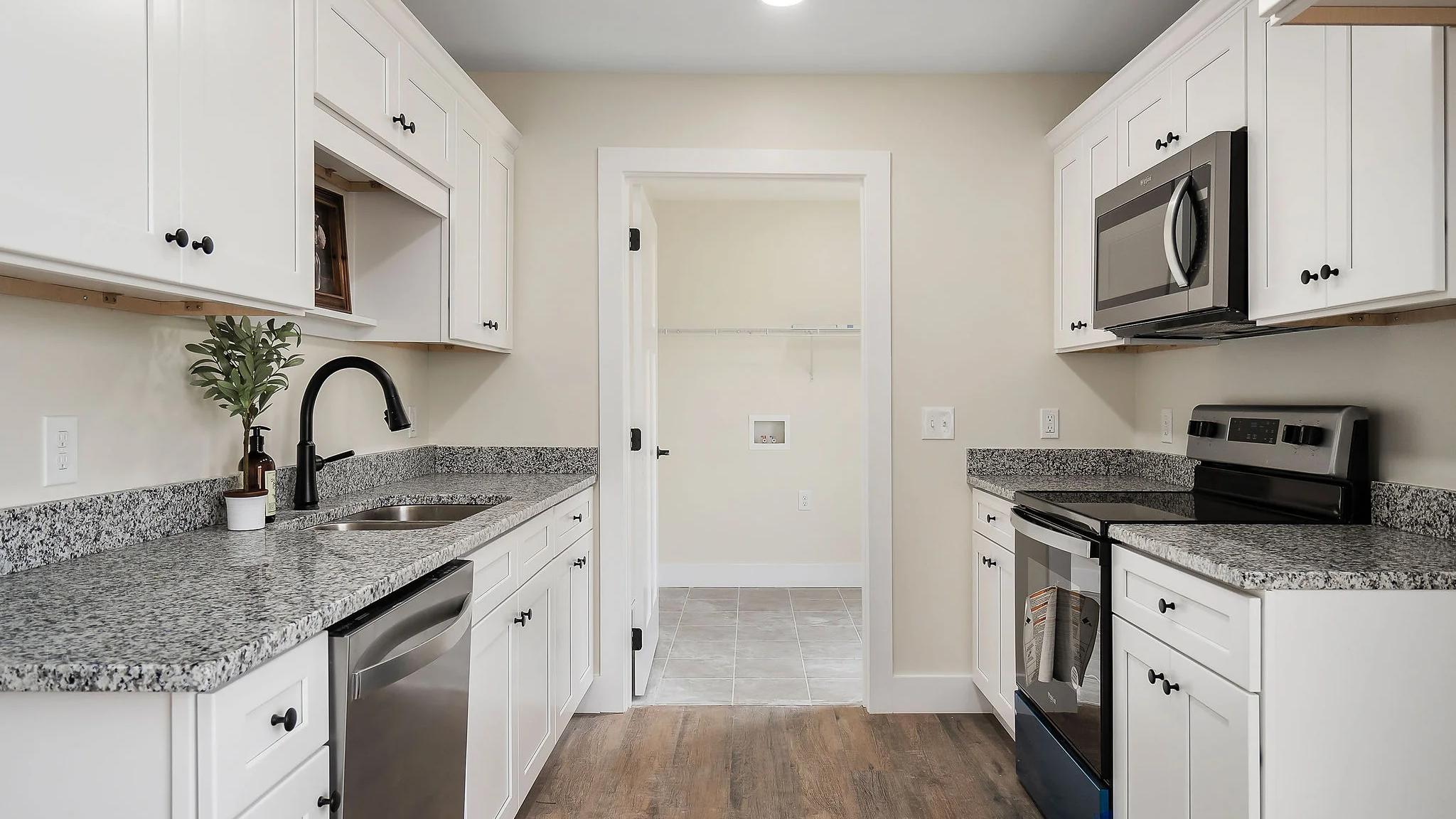
Renovation vs addition in Sparta, TN is a decision we help homeowners make all the time. You might love your neighborhood, your lot, and your commute, but the house itself is starting to feel tight, dated, or poorly laid out. The big question becomes, do you rework what you already have, or do you increase square footage with a new bump-out, second story, or full addition?
From our experience building and remodeling homes across the Upper Cumberland, the best answer depends on your structure, your site, your budget, and how you plan to live in the home for the next 5 to 20 years. In Sparta specifically, we also factor in things like sloped lots, drainage, septic or sewer constraints, and how the finished project will fit the surrounding homes.
In this guide, we will walk you through a clear home remodel vs addition comparison, including cost ranges, project timeline comparison, structural considerations, and home value ROI. We will also share a few real-world scenarios we see in Sparta, TN, so you can make a confident, practical decision before you spend money on plans.
Renovation vs addition in Sparta, TN: what each option really means
- Removing or relocating non-load-bearing walls to open up a kitchen and living area
- Rebuilding a kitchen or bath with new plumbing fixtures, cabinets, tile, and lighting
- Finishing an attic or reworking a bonus room for a new purpose
- Converting a formal dining room into an office or bedroom
- Updating systems like electrical, HVAC, insulation, and windows
An addition increases the home’s footprint or volume. Common addition types we build include:
- A primary suite addition (bedroom, bath, closet)
- A family room bump-out
- A garage with finished space above
- A sunroom or enclosed porch
- A second-story addition over part of the home
In a cost comparison remodel vs addition, renovations often look cheaper at first because you are not pouring new foundations or extending the roofline. However, renovations can get complicated fast when you open walls and discover outdated wiring, undersized framing, water damage, or poorly planned plumbing.
For homeowners in Sparta, the decision usually comes down to one core question: Can we get the function we want inside the existing footprint, or do we truly need more square footage?
If you are still early in the process, our team can help you sort that out during home design and planning, before you commit to a direction.
Cost comparison remodel vs addition: where the money goes
Budget is usually the first filter. While we can only price accurately after we understand your home and goals, we can explain what drives costs in each approach.
Typical cost drivers for a renovation
- Electrical panels that need upgrading to support modern loads
- Plumbing lines that are undersized or poorly routed
- Framing that needs reinforcement after walls are removed
- Subfloor issues, moisture damage, or inadequate crawlspace ventilation
- Insulation and air sealing gaps that affect comfort and efficiency
The visible finishes matter too, but the “behind the walls” scope is what surprises homeowners. If you are renovating a kitchen and moving plumbing across the room, that is a very different project than keeping the sink in place and updating cabinets and surfaces.
Typical cost drivers for an addition
Additions have more predictable categories of cost because you are building new space to current standards. The big line items include:
- Foundation work (footings, block, slab, or piers depending on site conditions)
- Framing, sheathing, and tying into the existing structure
- Roofing and exterior finishes to match the home
- New windows, exterior doors, and insulation
- Extending mechanical systems (HVAC sizing is a big one)
- Interior finishes, plus any new bathrooms or wet areas
In a home remodel vs addition discussion, additions often cost more per project because you are paying for all the building components again. That said, additions can sometimes be more cost-effective per square foot than a renovation that requires extensive structural correction.
A practical way to compare costs before you have plans
We recommend homeowners do a “function first” comparison:
- List the must-have outcomes (example: one more bedroom, a larger kitchen, a pantry, a second bath).
- Identify what can be achieved by reconfiguring existing rooms.
- Identify what requires new square footage.
- Prioritize the outcomes that will matter most in daily life.
If your must-haves require more area, an addition may be the only honest path. If your must-haves are layout and usability, a renovation can deliver a big transformation without expanding.
Project timeline comparison: how long each option takes in real life
Timeline is not just about inconvenience. It affects financing, temporary living plans, and stress.
Renovation timelines: shorter on paper, unpredictable in the walls
Many renovations can move faster because you are not starting from scratch. But they can also be more unpredictable. Once demolition begins, we may find conditions that require changes, such as:
- Replacing sections of subfloor
- Correcting framing around windows and doors
- Updating electrical to meet current code
- Addressing moisture issues in a crawlspace
Addition timelines: longer, but often easier to live through
Additions typically take longer overall because there is more construction. However, a well-planned addition can be easier to live through because much of the work happens outside the existing living areas until the tie-in stage.
For example, a primary suite addition can often be built with limited disruption until we connect HVAC, open an interior wall for access, and complete finish work.
Planning and permitting in Sparta, TN
In the Sparta area, timelines are also affected by:
- Site access and excavation conditions (rock, slope, drainage)
- Utility coordination (septic evaluations, water lines, electrical service)
- Material lead times (windows, cabinets, specialty finishes)
Permitting requirements can vary depending on the exact location and scope. We plan for inspections and code compliance from day one, including structural connections, egress requirements for bedrooms, smoke and CO alarms, and energy-related details like insulation and ventilation.
If you want a smoother schedule, the best thing you can do is invest in the preconstruction phase. That is where home design and planning pays off, because decisions are made before the jobsite forces them.
Structural considerations: when your house tells you “renovate” or “add”
Structural realities often decide the renovation vs addition question for you.
When a renovation makes sense structurally
- The current foundation and framing are in good shape
- You have wasted space (oversized hallways, unused formal rooms)
- The rooflines and load paths make reconfiguration feasible
- You can improve flow without major structural surgery
One common Sparta scenario is a home with a choppy kitchen, a small dining area, and a living room that feels disconnected. If the walls between those spaces are non-load-bearing, we can often open the layout and create a more modern great room feel without adding square footage.
When an addition is the safer structural choice
An addition is often the better route when:
- You are already tight on bedrooms or bathrooms
- Ceiling heights or roof framing limit your ability to finish attic space
- The existing layout cannot be fixed without moving too many systems
- You need a true primary suite, in-law space, or accessible main-level living
We also look closely at the home’s “bones.” Some older homes have framing that does not align well with today’s spans and loads. If a renovation would require large beams, posts, and extensive reframing, an addition can sometimes deliver the same goals with fewer compromises.
Site and neighborhood constraints in Sparta
Structural considerations are not only inside the walls. In Sparta, we pay attention to:
- Setbacks and lot coverage: Your addition footprint may be limited by property lines and local rules.
- Septic placement: If you are on septic, the drain field location can restrict where you can build.
- Slope and drainage: Many lots require smart water management, including gutters, grading, and possibly retaining solutions.
- Matching existing architecture: Roof pitch, siding, window proportions, and porch details matter for curb appeal and resale.
Our job is to design and build an addition that looks like it has always been part of the home, not an obvious afterthought.
If you are exploring options in the Sparta area, start with our local service page for Sparta so you can see how we approach residential projects in your community.
Home value ROI: which one pays you back better?
Home value ROI is a major part of the decision, but it needs to be viewed realistically.
Renovation ROI: strong when you fix what buyers notice
Renovations often deliver excellent ROI when they improve the features buyers care about most:
- Kitchens that feel functional, bright, and up-to-date
- Bathrooms that are clean, well-laid out, and durable
- Flooring, paint, and lighting that modernize the home
- Energy and comfort upgrades (windows, insulation, HVAC)
In many cases, a renovation increases perceived value more than it increases square footage. That matters in neighborhoods where homes are similar in size, and buyers compare finish quality and layout.
Addition ROI: best when it solves a market limitation
Additions can have strong ROI when they add what the home is missing relative to the local market, such as:
- Converting a 2 bed, 1 bath into a 3 bed, 2 bath
- Adding a primary suite that makes the home competitive
- Creating a dedicated office for remote work
- Adding a true mudroom and laundry zone for daily function
Where additions can underperform is when they push the home beyond what the neighborhood supports. That is why neighborhood considerations matter. We help you avoid overbuilding by looking at the surrounding home sizes, typical bedroom and bath counts, and the level of finish common in your area.
The “invisible ROI” homeowners feel every day
Not all ROI is resale. Some of the best returns are daily-life returns:
- No more bottleneck in a small kitchen
- A better morning routine with an extra bathroom
- Storage that reduces clutter and stress
- A layout that supports entertaining and family time
We encourage homeowners to balance resale value with livability. If you plan to stay in your Sparta home for 10 years, comfort and function are real value.
Neighborhood considerations in Sparta: fit matters as much as finishes
Sparta has a mix of established neighborhoods, rural properties, and homes on larger lots. Each setting changes the renovation vs addition calculation.
In-town and neighborhood settings
If you are in a neighborhood with modest lots, an addition may be constrained by setbacks and existing driveways, patios, or mature trees. In these cases, a renovation that improves layout can be the cleanest path.
We also look at exterior consistency. If the street has a cohesive look, an addition should respect rooflines, window styles, and proportions. That does not mean you cannot modernize, it just means the update should feel intentional.
Rural properties and larger lots
On rural lots, you often have more flexibility to expand. But you may also have septic constraints, longer utility runs, and more grading work. If your home sits on a slope, foundation design becomes a bigger part of the budget and timeline.
In these cases, we often compare:
- A ground-level addition that extends the footprint
- A second-story addition that reduces excavation but adds structural complexity
There is no one-size-fits-all answer, but we can usually identify the “lowest risk” path once we evaluate the home and site.
Real-world scenarios we see in Sparta-area homes
Here are a few examples similar to what we have helped homeowners plan. These are not one-size solutions, but they show how the decision process works.
Scenario 1: You need one more bedroom, but the layout is awkward
If the home has a formal dining room that is rarely used, a renovation may allow us to convert that space into a bedroom or office, especially if there is a nearby bathroom that can be updated.
Best fit: renovation, because you are solving the need without increasing square footage.
Scenario 2: You want a primary suite, and the current bedrooms are small
If the home lacks a true primary bedroom with a comfortable bath and closet, a suite addition can be the cleanest solution. Trying to carve out a suite inside a small footprint often leads to cramped rooms and compromised storage.
Best fit: addition, because you are adding a high-value space that improves daily life and resale appeal.
Scenario 3: You want a bigger kitchen, but you also want better flow
Sometimes the right move is a renovation that opens walls and improves flow, plus a small bump-out to gain a pantry or breakfast nook. This hybrid approach can control costs while delivering meaningful space.
Best fit: renovation plus targeted addition, because it balances budget and function.
We build these types of projects as part of our home renovations and additions service, and we always tailor the plan to the home’s structure and the homeowner’s goals.
How we recommend choosing: a decision framework you can use
When homeowners ask us for a direct recommendation, we walk through a simple, practical framework.
Step 1: Define the problem in plain language
Examples:
- “We need a second bathroom.”
- “We need a bigger kitchen and more storage.”
- “We need space for an aging parent.”
- “We work from home and need quiet offices.”
Clear goals prevent expensive scope creep.
Step 2: Identify whether the issue is space, layout, or condition
- Space problem: You are truly short on square footage.
- Layout problem: You have enough square footage, but it is poorly used.
- Condition problem: The home is dated or has failing systems.
Step 3: Check the structural and site constraints early
Before you fall in love with a concept, confirm:
- Load-bearing walls and roof structure
- Foundation condition and crawlspace access
- Septic, setbacks, and drainage realities
- HVAC capacity and electrical service
This is where professional evaluation saves money. It is also where we apply our broader residential construction services experience, because renovations and additions touch every trade.
Step 4: Compare disruption and lifestyle impact
Ask:
- Can we live in the home during construction?
- Which rooms will be out of service, and for how long?
- Do we have kids, pets, or work-from-home needs that change the plan?
Sometimes the “best” financial option is not the best lifestyle option.
Step 5: Make the decision that fits your long-term plan
If you plan to sell in 2 to 3 years, ROI and neighborhood fit may dominate. If you plan to stay long-term, build for comfort, durability, and low maintenance.
Why hiring the right builder matters for both options
Whether you choose a renovation or an addition, the risks are similar: hidden conditions, change orders, and quality issues if the work is not coordinated carefully.
We approach projects with a builder mindset, not a patchwork approach. That means:
- We plan structural changes before demolition
- We coordinate trades so electrical, plumbing, HVAC, and framing work together
- We focus on water management, flashing, and proper tie-ins, especially on additions
- We aim for consistent finishes so the old and new parts of the home feel seamless
Most importantly, we communicate. A renovation vs addition decision is stressful enough without surprises that could have been caught in planning.
If you are also comparing building new versus changing your current home, you may want to explore our custom home building and new home construction services, especially if your current home has major structural limits.
Conclusion: the best choice is the one that solves the right problem
In Sparta, TN, the renovation vs addition decision is rarely about a single factor. It is about aligning your goals with your home’s structure, your site constraints, your timeline, and the neighborhood context. Renovations usually win when you can improve flow, modernize finishes, and fix functional pain points inside the existing footprint. Additions usually win when you need to increase square footage in a meaningful way, like adding a primary suite, bedroom, or bath that the home cannot realistically create through reconfiguration.
If you want a clear recommendation based on your home, we can help you evaluate options, outline a realistic project timeline comparison, and build a scope that matches your budget. Start by visiting our Sparta service area page, then reach out to talk through your ideas and next steps.
Frequently Asked Questions
It depends on what you are changing. A renovation can cost less when you keep plumbing and walls largely in place, but it can get expensive if we uncover electrical, framing, or moisture issues. An addition usually has more predictable categories of cost (foundation, framing, roofing, exterior), but the total project is often higher because you are building new square footage.


